FARM HEX

Imagine chess with an Age of Empires economy on a Civ map. Feudal strategy and warfare.
Early alpha. Turn-based 1v1 against the AI. PvP soon.







The whole roster — swipe to see them all
The board, up close
Zoom all the way in and the camera flattens and pulls focus. Whatever you are holding stays sharp while the ground in front of it and behind it falls away — a strategy board at arm’s length, a duel at eye level. Same camera, same turn, no cutscene.
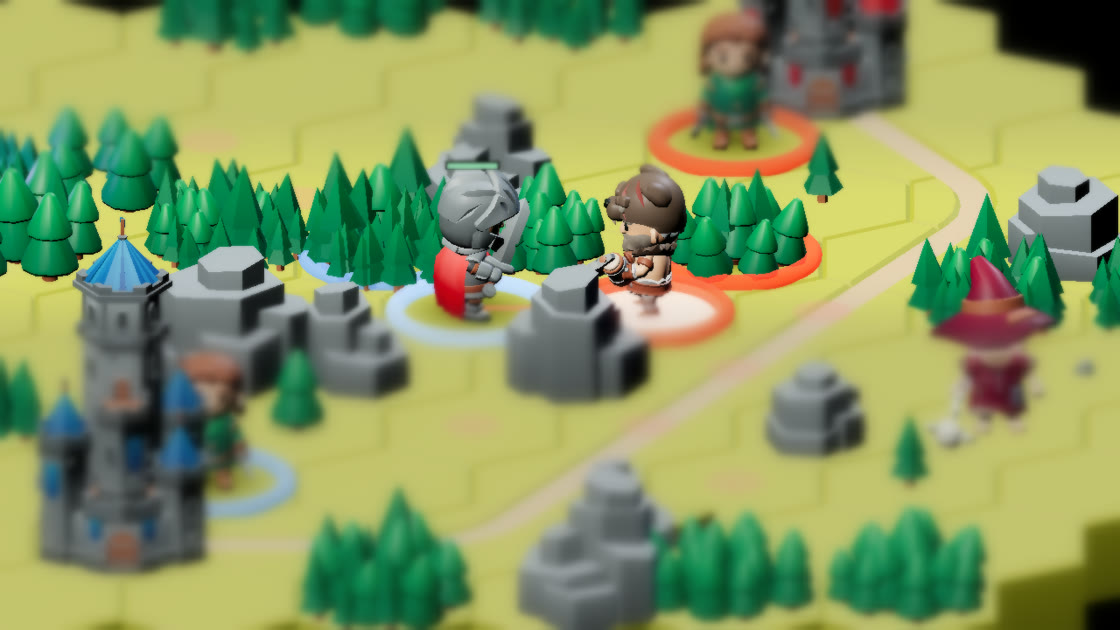
A knight and a brute, mid-exchange. Depth of field is real here — the focal plane sits on the fighters, so the castle behind and the grass in front both go soft.
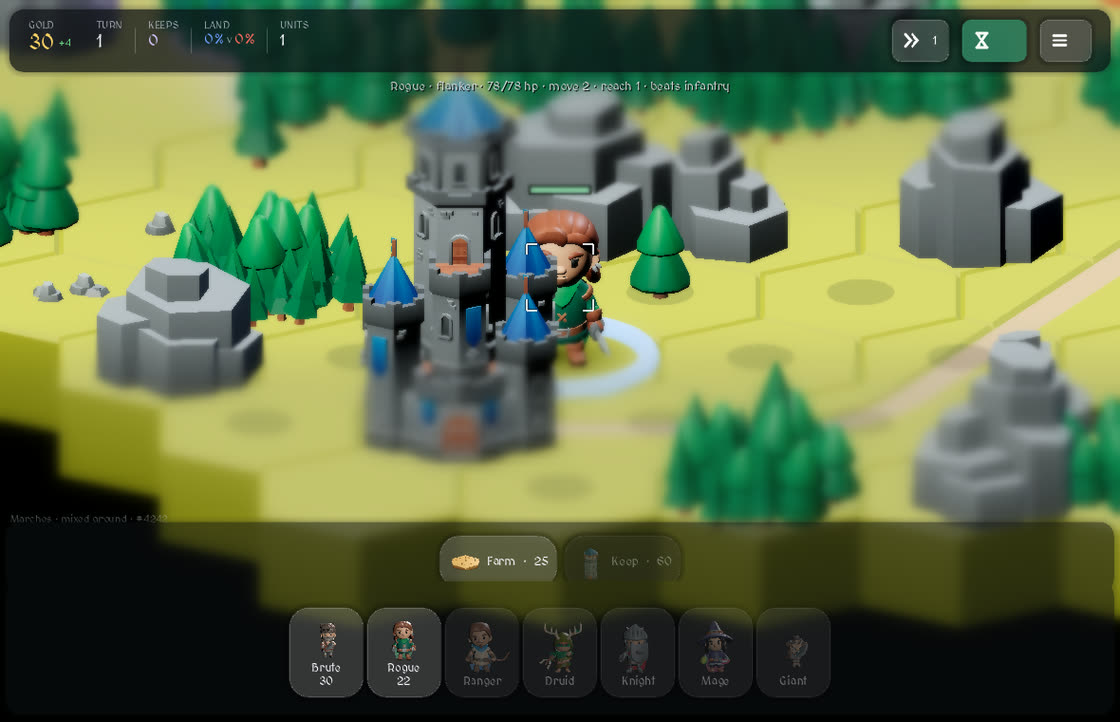
Held on the piece you picked up. Brackets mark the focal subject; the interface stays sharp.
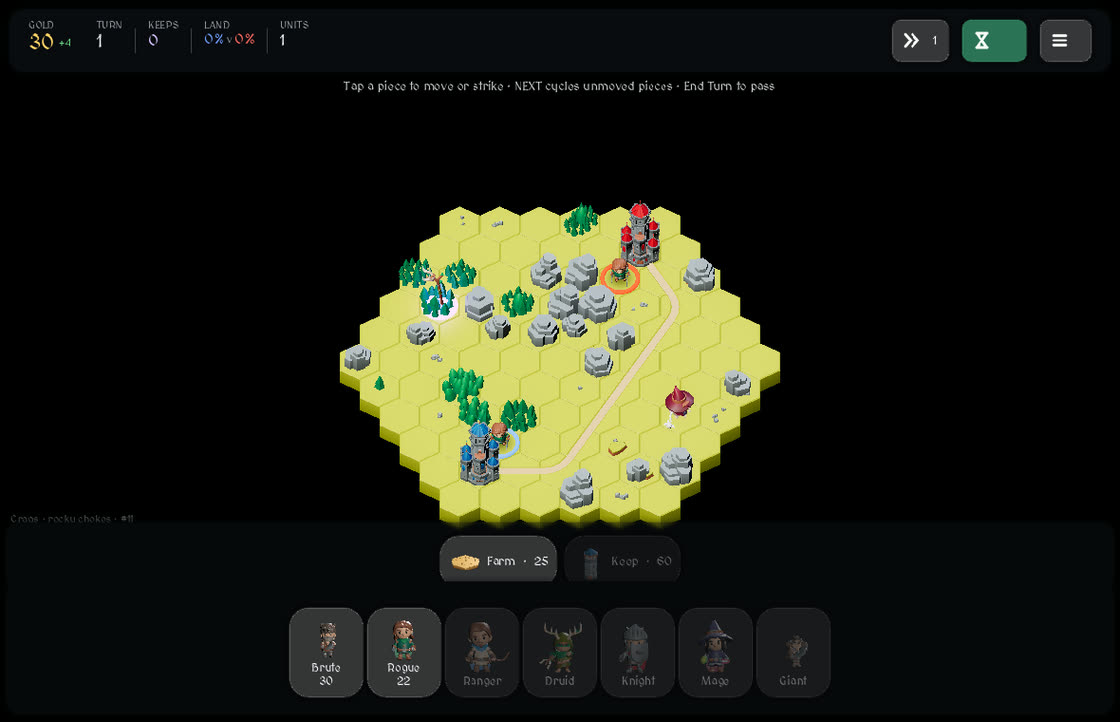
Pulled back, it is a diagram. Two castles opposite; the two prizes on the other diagonal.
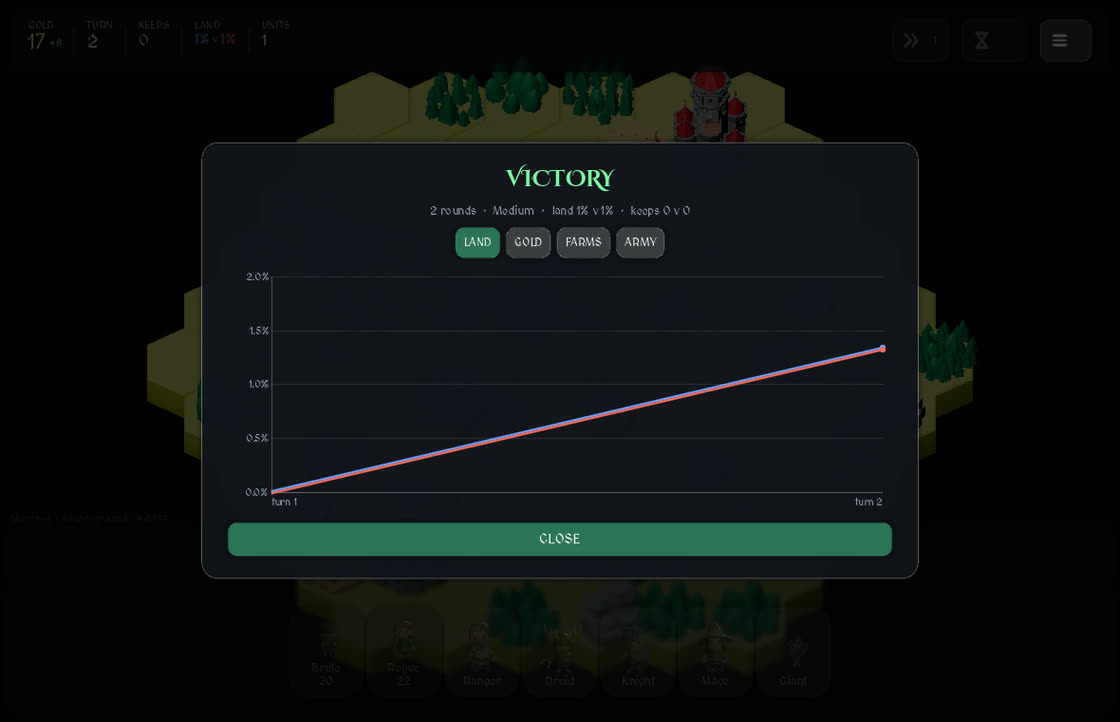
Every match ends in a report. Land, gold, farms and army for both houses, round by round.
Six farms make a keep
This is the whole game in one rule. Farms are income, but they are also ground. Ring a single hex with six of your own and you may raise a Keep in the middle of it — which pays, musters troops, and widens how far you can plough next.
A keep is never bought, only earned. You commit 150 gold of farmland to a shape before you spend a coin on the keep itself — and every one of those farms is visible, undefended, and burnable while you do it.
That is where the tension lives. Your opponent can see the ring forming three turns out and ride to break it.
Every turn is a real decision
Melee walk two hexes. Archers walk one and buy that with reach. Step beside an enemy and your move ends there. Nothing crosses the board on tempo alone, so where a piece stands still matters three turns later — that is the whole design.
No fog, no dice, no hidden information. You lose because you were out-thought, and you can see exactly where.

The loop
Plough
Farms cost 25 and pay every turn. Income and territory in the same object — you cannot hoard one without exposing the other.
Ring a keep
Six of your farms around one hex earns the right to raise a Keep there. It pays, musters, and extends your reach.
Field an army
Your castle musters a levy. A keep opens the trained arms. Two keeps bring the Giant. Every soldier is farmland you chose not to lay.
Three ways to win
- Raze the castle
- The short game. Bring a Giant — it hits walls three times as hard and is hopeless against people, so committing to it is a real bet.
- Take half the land
- The long game. Hold farms on 50% of the board. Your opponent watches it happening and rides out to burn it, which is exactly the point.
- Lead when time runs out
- The tiebreak. Broadest realm takes it, farmland weighed first.
Seven pieces, and two you have to earn
A skeletal Warden paces open country and strikes anything beside it, either army. Put it down and your house may raise Mages. A druid's Grove stands in the woods for whoever walks onto it first.
Neither is winner-take-all: claim one and it rises again elsewhere, so your opponent can go and earn their own. Being first still pays — you field the piece sooner, and you alone keep the relic.

Play it however you like
It runs in a browser on a phone or a desktop, with no install and no account. Matches carry as a link — copy it, send it, and your opponent opens the position exactly as you left it. Correspondence play needs nothing but a chat window.
Or press Watch two AIs and let the thing play itself while you work out what it is doing.